Talk to us about our Advertising options. We publish our bi-annual magazine and send out regular newsletters too.
Past Paper Download
Price
£50.00
Variations
Liquid extraction is widely used for the removal of sulfur compounds, mainly H2S, COS, and mercaptans, from LPGs and NGLs using amines and caustic soda. Historically, the best possible computational approach to understanding these units has been the ideal-stage, augmented with anecdotal, experience-based estimates for tray efficiencies and HETP values. The situation is more complex than this because such an approach takes no account of how the treater’s actual internals, phase inversion, solvent and raffinate flowrates, or the composition and temperatures of the streams feeding it affect performance. Performance remains unpredictable.
Sieve-tray efficiencies for H2S removal are typically in the range of 5–25% and HETPs are 2–5 metres. Parameters in these ranges call into question the very relevance of an ideal stage. Nevertheless, ideal stages augmented by unreliable rules-of-thumb are all engineers have ever been able to call upon, until now.
This contribution reports on the game-changing development of a mass transfer rate-based simulator for amine treatment of LPG and NGLs, motivated by the complete lack of commercial analytical methods. The paper presents a series of case studies to provide direct, quantitative understanding of the effect of solvent choice, concentration, flow rate, and tray parameters such as sieve hole size as well as packing characteristics on sulfur removal from liquid hydrocar-bons.

Talk to us about our Advertising options. We publish our bi-annual magazine and send out regular newsletters too.
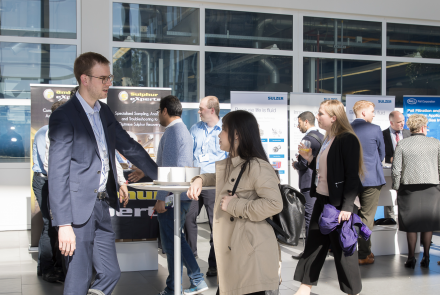
Our conferences provide a direct marketing channel to Directors and Process Engineers within the natural gas processing industry. You can meet and engage with around 100-member companies, all in one place. Click here to view our Sponsorship Opportunities.